Micron CEO Challenges Memory Market Pessimism: 3 Key Insights from Jim Cramer Interview
Micron CEO Sanjay Mehrotra has effectively countered the prevailing pessimism surrounding the memory market. This is the primary conclusion drawn from an in-depth interview with Mehrotra conducted by Jim Cramer on 'Mad Money'. Mehrotra, a veteran of the highly volatile memory industry with over four decades of experience, including co-founding SanDisk, is currently at the helm of Micron during a critical juncture for the sector. The explosive growth of artificial intelligence (AI) has created a significant imbalance between supply and demand.
"Memory has become a key enabler of AI," Mehrotra stated, emphasizing that "Memory is the intelligence behind artificial intelligence." Micron, along with competitors SK Hynix and Samsung, has experienced substantial profit and stock price increases, despite recent market fluctuations. All three companies are making significant investments in expanding production capacity to meet the burgeoning demand. However, the timeline for new fabrication plants to become operational, from the initial groundbreaking to the delivery of chips to customers, spans several years. This presents a generational memory cycle.
The central question on Wall Street revolves around the longevity of this boom. The skepticism stems from historical precedents, where periods of high demand have often been followed by sharp downturns. The common caution is that "this time is different" are the most dangerous words in finance. However, this current period of unprecedented demand is fostering deeper collaborations between memory manufacturers and their clientele. The counterargument, and a potentially lucrative one, is identifying when the situation truly is different. While time will ultimately reveal who is correct, Mehrotra's insights into the current cycle's dynamics suggest that this time may indeed be different. The focus now shifts to supply and demand, the fundamental drivers of any market.
Key Takeaways for Investors
1. Cycle Durability Driven by Diverse Demand
While the expansion of AI data centers is the primary catalyst for memory demand, Mehrotra highlighted that demand is far more widespread. The training and inference for large AI models are primarily conducted in data centers, but there's a significant trend to push processing power to the "edge," meaning directly onto the devices consumers use. As these devices become more capable of handling AI-intensive tasks and advanced applications, their memory requirements increase proportionally.
Mehrotra explained, "You know, today there is no AI without memory. AI systems need more memory. They need higher performance memory. They need lower power memory. So, the value of memory, that equation has totally changed. Our customers, to drive their own growth, they need more compute. They need more memory. So, memory really has become a key enabler. ... This is not only in data centers. Even in your phone, you know, to have richer experiences in AI-enabled phone, you need more memory content. Your PCs, your self-driving cars, all of them now need more and more memory content. So, the need for memory is ever greater, and now in AI, it's not just the devices and the servers. Now you have agentic AI, agentic. It's all the agents, all the context windows that are getting larger. That's all. They fill with more memory as well."
To illustrate this growth, the original iPhone had 128 megabytes (MB) of DRAM, while current models boast 8 to 12 gigabytes (GB) – a massive increase. Similar trends are evident across consumer electronics. Leading AI chips from NVIDIA, AMD, and Google utilize High-Bandwidth Memory (HBM), a specialized DRAM form. Micron, SK Hynix, and Samsung are prioritizing HBM production, contributing to the current memory shortage. AI chips, smartphones, and laptops are all competing for the same fundamental DRAM resources.
The automotive sector is another significant growth area. As vehicles transition from traditional internal combustion engines to more digital and electrified systems, their need for memory grows. Increased levels of autonomy further compound this demand, as critical functions in autonomous vehicles require immediate, on-board processing to ensure safety and minimize latency. Robots, described as the ultimate edge computing devices, will also require substantial memory to process complex, multi-modal inputs and access contextual information for decision-making.
The overarching theme for AI is context, and memory is the technology that enables its expansion. As tasks become more intricate, the required context grows, making memory the key enabler of advanced AI capabilities.
2. Constrained Supply Meeting Unprecedented Demand
While demand is robust, the availability of supply is a critical factor determining pricing. The primary concern for investors is the durability of the current cycle and when supply will meet demand. Mehrotra believes this is still a long way off, despite Micron's significant investments in new fabrication plants in Boise, Idaho, and Clay, New York. Micron plans to invest $250 billion in the U.S. through 2035, with substantial support from the CHIPS Act.
"Memory has secular demand with AI, across data center, across consumer markets, and, of course, industrial automation and, in future, robotics," Mehrotra stated. "By end of the decade, each of these robots — there will be, over time, hundreds of millions of these robots — they all require tons of memory. So, memory demand is tremendous. Supply is constrained. We see 2027 even tighter with respect to 2026. What we are building here [at the first Boise fab], first wafers out in 2027, production ramping in 2028 timeframe. Clay, New York, production ramping, by 2029 to 2030 timeframe. The second Boise Fab will start ramping up production in late '28 timeframe."
Competitors like Samsung and SK Hynix also face multi-year lead times for new facilities. Unlike past cycles where existing factories could be augmented, the current situation demands entirely new, large-scale manufacturing plants. This lengthy build-out period significantly mitigates the risk of oversupply. The combination of tight supply, extended lead times for new capacity, and evolving demand profiles suggests that "this time may well be different." Even if one considers the market cyclical in the long term, adhering to past cycle timings will likely lead to an underestimation of the current boom's sustainability. Technological advancements are driving unprecedented demand, while structural limitations in capacity prevent supply from adequately meeting it.
3. Strategic Customer Agreements Bolster Confidence
To mitigate the risks of over-investment and demand volatility, Micron has implemented strategic customer agreements (SCAs). These are multi-year, take-or-pay contracts designed to secure orders for future chip production. Micron has expanded its SCAs significantly, indicating that customers are proactively securing supply for years to come, driven by their own demand forecasts and a lack of expected supply relief.
Mehrotra noted a growing number of these contracts, suggesting broad-based confidence among memory purchasers that the current boom is substantial and will persist. While customers might be overestimating future demand, the increasing number of SCAs from diverse clients strengthens the argument that the current demand is widespread and not driven by a few isolated players. This growing consensus among buyers reinforces the view that the memory market boom is indeed real and sustainable.
The robust supply-and-demand scenario not only supports sales and earnings but also opens the door for increased shareholder returns. Mehrotra has committed to future share repurchases, aligning with similar capital return plans from SK Hynix and Samsung. Although Micron's ability to conduct large-scale buybacks has been temporarily constrained by CHIPS Act funding requirements, this prohibition is set to expire soon, paving the way for significant shareholder returns in 2027. Given Micron's projected free cash flow, substantial buybacks are anticipated, potentially mirroring the commitment of peer SanDisk to return excess cash to shareholders.
Fresh materials — MMA news
Crypto Gaming Terms: RTP, Provably Fair, House Edge Explained
Navigating a crypto casino's game lobby often means facing a barrage of unfamiliar abbreviations and terms. These can be used casually but have distinct meanings. Understanding each term helps you read game statistics accurately instead of just glancing over them. RTP: Your Long-Run Payou

Kenny Cross Aims for Statement in Muay Thai Debut on November 7
Kenny Cross shares his thoughts on his upcoming Muay Thai bout against James Barney at MMT 11 on November 7. Cross also addresses his defeat by Salahdine Parnasse and the PFL-MVP merger, detailing his predictions for the fight. “He’ll either be knocked out in the first round, or we’ll pus

UFC 334: Gane vs. Hokit Headlines Madison Square Garden Return
UFC is back at Madison Square Garden in New York City, headlined by a championship doubleheader. In the main event, undisputed UFC heavyweight champion Ciryl Gane makes his first title defense against No. 4 ranked contender Josh Hokit. The co-main event features a highly anticipated women's ban

Influencer Fights Terminator-Style Robot in MMA Match
American influencer Frankie LaPenna entered the MMA cage on September 18 to face a six-foot-tall robot. The event was organized by the robot's creator, REK (Robot Entertainment Kombat). LaPenna is known for his viral TikTok and YouTube videos featuring green screen stunts, often depicting
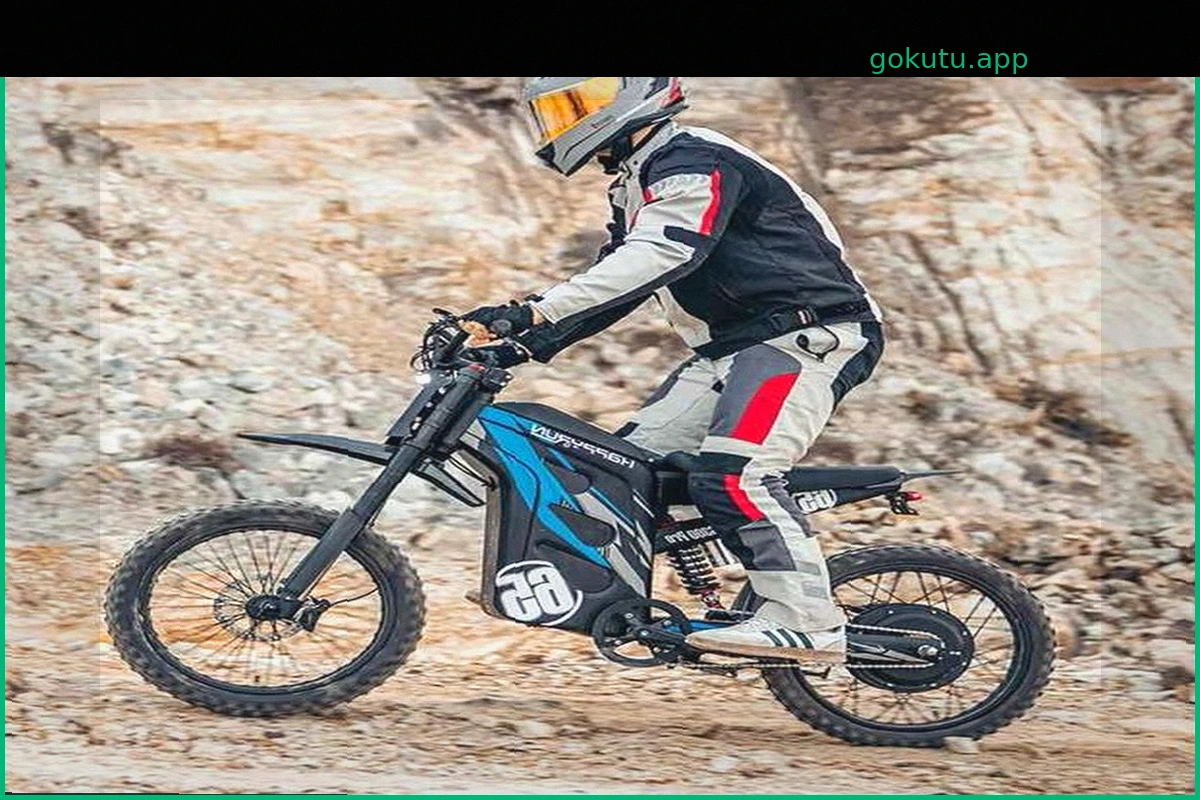
Electric Dirt Bikes Revolutionize Off-Road Riding
Electric bikes are no longer just alternatives to traditional bicycles. This technology now reshapes daily commutes and recreational trail riding. Electric dirt bikes stand out as a thrilling development in the two-wheel industry. They merge powerful motors, rechargeable batteries, modern susp

Solomon Renfro arrested for alleged assault in New York
Mixed martial artist Solomon Renfro, based in New York, was arrested Sunday. Police responded to a 911 call early Sunday morning in Chinatown, Manhattan, finding a 22-year-old woman with scratches and bruises. Renfro, 29, nicknamed "The Black Dragon," was taken in for questioning. He was subse